
Hernandorena is promoting the Carob Tree project to professionalise carob tree cultivation in Spain. The initiative combines innovation in nurseries and agronomic modernisation to lead this crop in the midst of a process of change. The next knowledge transfer conference will take place on 12 June 2025.
Viveros Hernandorena is strongly promoting its innovation strategy in the nursery sector through the Carob Tree Project, an ambitious initiative that seeks to professionalise carob tree cultivation in Spain and turn the country into the main European benchmark in terms of surface area, quality and technical knowledge of this emerging crop.
“We firmly believe in the potential of carob as a profitable, sustainable alternative adapted to climate change, especially in warm areas such as the Valencian Community, the Balearic Islands or the south of the peninsula. But for cultivation to be professional, it must start with a quality plant and a well-designed agronomic system,” explains Rosa Hernandorena, commercial director of Viveros Hernandorena.
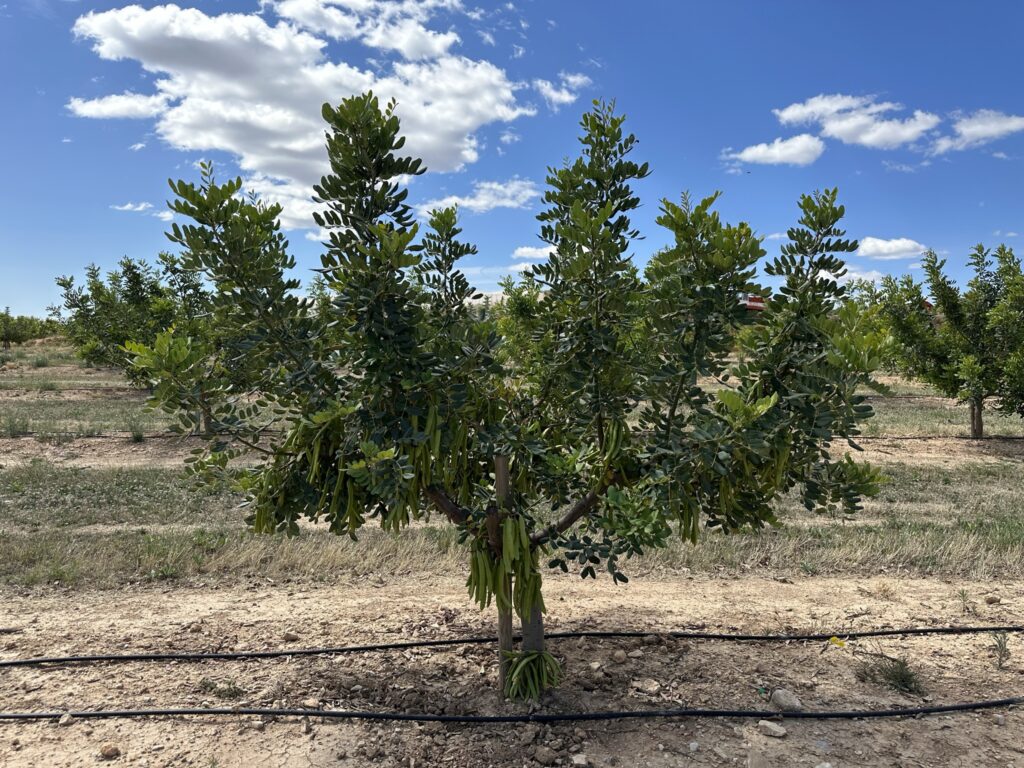
Secondly, the project focuses on modernizing the crop through more intensive planting frameworks to increase productivity and shorten the time to fruiting. From its experimental field, and in collaboration with the Association of Innovative Carob Companies (EiG), the University of the Balearic Islands, the University of Bari (Puglia, Italy), and research centers such as IVIA, the company is testing new varieties, planting densities, pruning techniques, fertigation, and harvesting systems. “We want to show—with real data—how to intensify cultivation without compromising sustainability, and allow each grower to choose the model that best fits their farm,” she adds.
Visits to the experimental field are held every 15–20 days, with the next technical field day scheduled for June 12. “We are amazed by the level of interest. More and more farmers and technicians are visiting to see the results, exchange experiences, and receive training. That’s the key: building a technical community around professional carob cultivation,” she says.
This year, Viveros Hernandorena has already grafted more than 100,000 carob plants, currently in the greenhouse sprouting phase. They are expected to be ready for the market from September onwards.
Results of the season and progress in other crops
Beyond carob, the company has closed an excellent winter and spring season, with record exports and national sales of persimmon, and a good performance of pomegranate and stone fruit trees. ‘Almond trees have had a more moderate rate of plant sales, but we are confident that interest will recover thanks to the rise in almond prices and the recent improvement in rainfall’, Rosa Hernandorena explains.
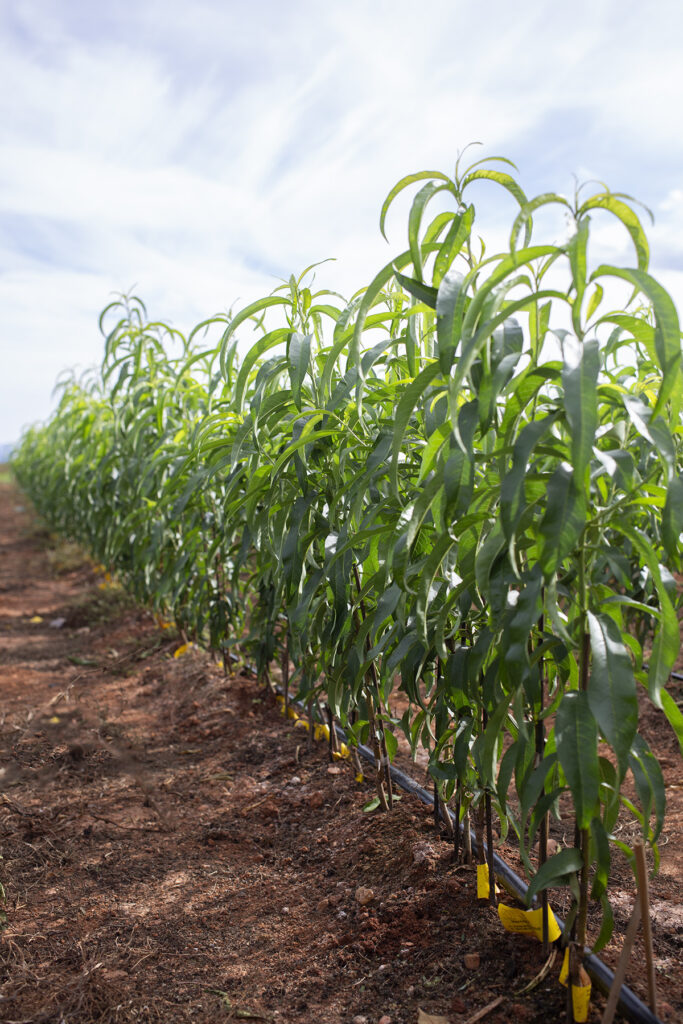
In stone fruit trees, the company has developed an intense micro-grafting campaign with certified hybrid rootstocks, reaching 150,000 plants this spring, which are already in its field nursery. “We are extending our range of subspecies such as platerinas, paraguayos, plums and peaches. The aim is to cover all the professional demand with varieties from the main national and international breeders”, he adds.
Technology at the service of the modern nursery
One of the project’s key technical milestones has been the introduction of ozone preservation chambers, allowing bare-root plant deliveries to extend into late May without any issues. “This has been a revolution for the sector. It gives us greater commercial flexibility and better stock management. Growers also benefit by receiving plants at more optimal times, without pressure,” Hernandorena concludes.